
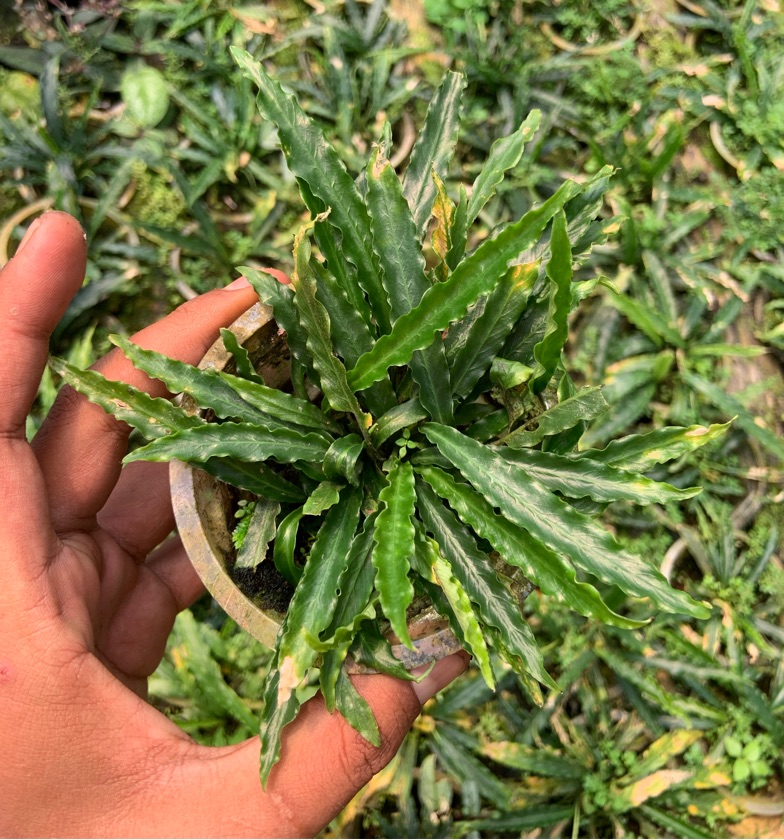
Schissmattoglotis Gui
$35.00
The Gui Forest Aroid
What Is Schismatoglottis ‘Gui’?
Schismatoglottis ‘Gui’ is a collector-type Schismatoglottis known for its compact growth and decorative foliage. The name “Gui” usually refers to a selected form or locality rather than a formally described species.
Schismatoglottis plants naturally grow in warm, humid rainforests across Southeast Asia, often on forest floors or near moist riverbanks. This plant is not aquatic and should not be fully submerged.
It is valued for its neat shape and subtle leaf detail, making it suitable for terrarium and indoor tropical collections.
Compact and refined, Schismatoglottis ‘Gui’ is ideal for growers who enjoy structured rainforest foliage.
How It Grows
This plant grows from a short creeping stem and forms a compact clump over time.
Growth is moderate under warm and humid conditions.
The Leaves
The leaves are slightly firm and decorative.
Color: medium to deep green, sometimes with subtle pattern
Surface: smooth with light natural sheen
Shape: oval to elongated with pointed tip
Leaf appearance may vary depending on the selected form.
Light Needs
Prefers bright, indirect light.
Avoid strong direct sunlight
Soft light supports healthy foliage
Low light may slow growth.
Water & Growing Conditions
Keep soil evenly moist but not soggy
Use airy, well-draining aroid mix
Prefers high humidity
Ideal temperature: 22–30°C
Avoid allowing the soil to dry out completely.
Growing Environment
Best suited for:
Terrariums
Humidity cabinets
Indoor tropical collections
Greenhouse setups
Not suitable for full submersion in aquariums.
Care Level
Medium care.
Better for growers with some experience
Sensitive to low humidity
Moderate growth rate
Handling Note
Maintain stable humidity and consistent moisture. With proper care, Schismatoglottis ‘Gui’ will maintain its compact form and healthy rainforest appearance.