
Lecanopteris Spinosa
$55.00
The Spiny Ant Fern
What Is Lecanopteris spinosa?
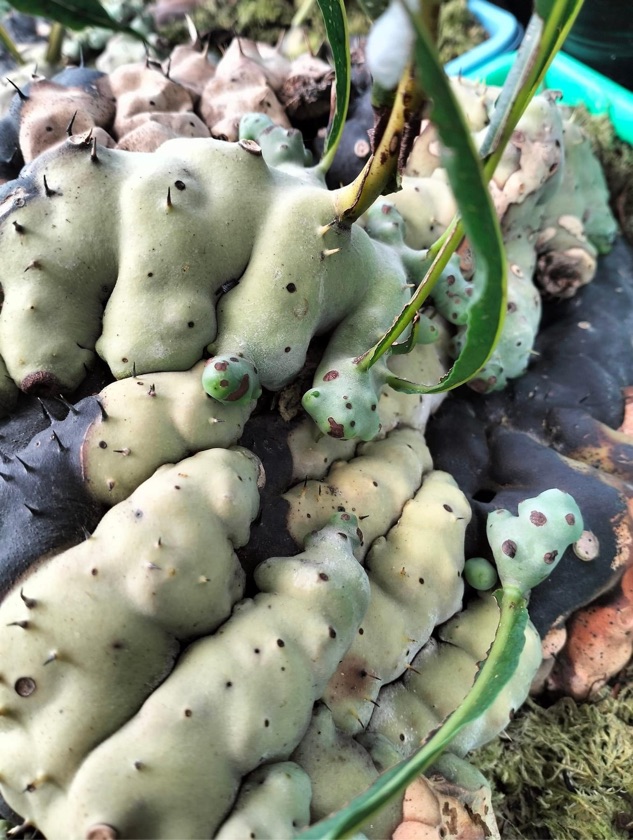
Lecanopteris spinosa is a rare tropical epiphytic fern known for its thick, swollen rhizome covered with small spine-like projections. The name spinosa means “spiny,” referring to the textured surface of its unique base.
Native to Southeast Asia, this fern grows attached to trees in warm, humid forests. In nature, ants live inside its hollow rhizome and help protect the plant. In cultivation, ants are not necessary, but the plant still develops its bold, sculptural form.
It is not an aquatic plant and should never be submerged. Instead, it grows best mounted on wood or in very airy, well-draining media with stable humidity.
Distinct and dramatic, Lecanopteris spinosa is perfect for collectors who enjoy unusual ferns with strong character.
How It Grows
This fern grows from a creeping, swollen rhizome that becomes thicker and more textured over time. The rhizome may develop hollow chambers and small spine-like bumps.
Fronds grow upward and slightly outward from the rhizome, forming a balanced display.
Growth is slow to moderate under stable tropical conditions.
The Leaves (Fronds)
The fronds are narrow and divided.
Color: bright to medium green
Surface: smooth
Shape: segmented and slightly arching
The clean green foliage contrasts strongly with the rugged, spiny rhizome.
Light Needs
Prefers bright, indirect light.
Avoid direct sunlight
Filtered light supports steady growth
Low light may slow development.
Water & Growing Conditions
Keep medium lightly moist but not soggy
Use very well-draining, airy substrate or mount on wood
Requires moderate to high humidity
Ideal temperature: 22–30°C
Good airflow is important to prevent rot.
Growing Environment
Best suited for:
Mounted displays
Orchid-style pots
Greenhouses or humidity cabinets
Not suitable for aquariums or submerged setups.
Care Level
Medium care.
Suitable for growers with some experience
Sensitive to overwatering
Slow-growing but long-lasting
Handling Note
Do not bury the rhizome deeply in soil. Keep it exposed or lightly covered to allow airflow. With stable warmth and humidity, Lecanopteris spinosa will gradually develop a larger and more textured rhizome over time.