
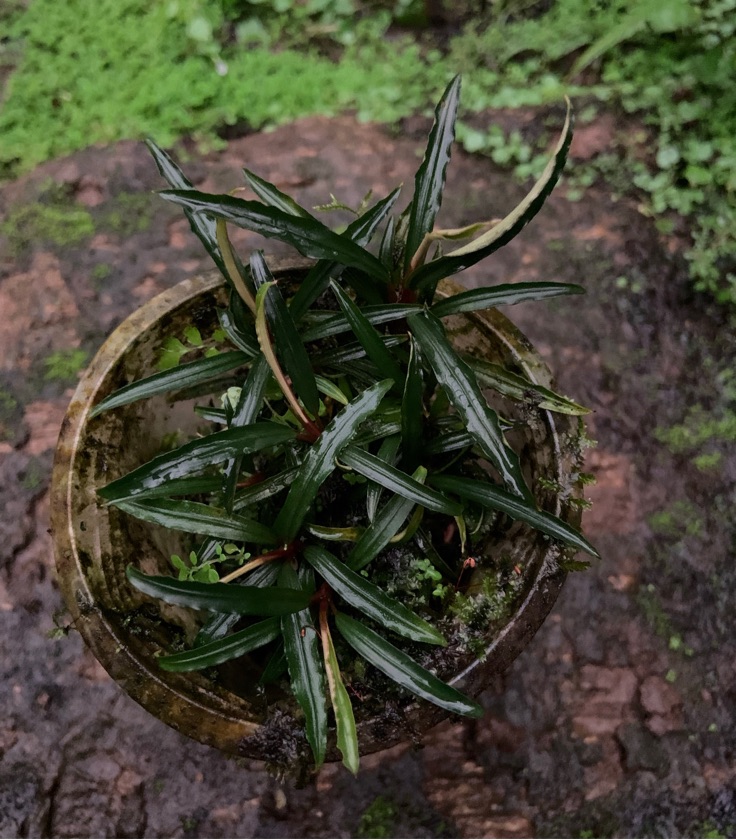
Bucephalandra Crocodile
$19.00
The Crocodile River King
What Is Bucephalandra ‘Crocodile’?
Bucephalandra ‘Crocodile’ is a rare Bucephalandra variety known for its heavily textured leaves that resemble crocodile skin. The name “Crocodile” comes from the raised, bumpy surface pattern that gives the plant a rugged and bold appearance.
Native to Borneo, Bucephalandra naturally grows attached to rocks and driftwood along fast-flowing jungle streams. It is a true aquatic plant and can grow fully submerged in aquariums or emersed in high-humidity setups.
This variety is especially valued for its thick leaves and strong texture, which add depth and character to aquascapes.
How It Grows
This plant grows from a creeping rhizome that attaches firmly to rocks or driftwood. It spreads slowly and forms compact clusters over time.
Growth is slow under stable aquarium conditions.
The Leaves
The leaves are thick and heavily textured.
Color: deep green to dark green
Surface: raised, bumpy texture resembling crocodile skin
Shape: oval to slightly elongated
The textured surface is the plant’s main highlight.
Light Needs
Prefers low to medium light.
Moderate light enhances texture and sheen
Avoid strong light to reduce algae risk
Stable lighting keeps growth consistent.
Water & Aquarium Conditions
Attach to rock or driftwood
Do not bury the rhizome
Thrives in clean, well-circulated water
CO₂ is optional but improves growth
Ideal temperature: 22–28°C
Stable water parameters are important for healthy leaves.
Growing Environment
Best suited for:
Freshwater aquariums
Nano tanks
Nature-style or detail-focused aquascapes
Paludariums (emersed form)
Care Level
Low to medium care.
Suitable for beginners
Slow-growing and easy to manage
Minimal trimming required
Handling Note
Keep the rhizome above the substrate to prevent rot. Once attached and settled, Bucephalandra ‘Crocodile’ will grow steadily and maintain its bold, textured foliage.